
"organic Ugandan coffee"
400 article(s) found

Introduction to the method of price treatment in producing areas for describing the grindness of Ugandan coffee
Uganda is the country of origin of coffee grown in Robusta, but commercial cultivation of Arabica species here did not begin until early 1900. Today, there are still a large number of wild robusta coffee trees in Uganda, which is rare in cities in the world. As a landlocked country, the large coffee cultivation in Uganda is often interplanted, where coffee trees are mixed with food crops and rubber trees.

Uganda Coffee Bean Flavor Taste Manor Introduction Uganda Fine Coffee Features
Mbale on Mount Elgon to the east and other producing areas near the border with the Democratic Republic of the Congo to the west are known as Wugar. Officially listed grades are Oaganic (organic), Bugisu AA, Bugisu A, Bugisu B, Bugisu PB, Wugar, Drugar and others not listed. To find a good Ugandan coffee, you must first identify Bugisu AA, A

Story of Uganda Coffee Bean producing area, Pearl of Africa _ factors affecting the Price of Ugandan Coffee Bean
Professional coffee knowledge exchange more coffee bean information follow coffee workshop (Wechat official account cafe_style) Uganda does not hesitate to put illegal farmers in jail in order to improve the quality of coffee beans, but experts believe that the goal can only be achieved by introducing farming programs, education and other incentives. Coffee beans are an important export commodity of Uganda, but they have been dragged down by the decline in commodities in recent years.

Flavor description of Ugandan coffee boutique coffee beans introduction to the taste of producing areas
The people of all parts of Uganda resisted the British aggression tenaciously. In 1893, Britain sent troops to occupy the Kingdom of Bunioro, and King Kabarega led some of the people to wage guerrilla warfare for six years. In 1897, King Mwaanga of Buganda raised his army against Britain and later joined Kabarega in the Rango region. In April 1899, the two kings were captured and the uprising failed. To make it easier to rule

Quality characteristics of Ugandan Coffee Flavor description treatment; introduction to fine coffee beans with taste grinding scale
Uganda coffee beans are very suitable for making Italian and other flavors of coffee. More importantly, Uganda coffee beans are strictly screened according to the standards of the international market to ensure their high quality and pollution-free characteristics. Africa is home to two major varieties of coffee, Arabica and Robusta, while the enjoying plateau is located in eastern Africa.

Description of taste and flavor of Ugandan coffee beans introduction to the production areas of varieties by grinding scale treatment
Uganda coffee beans are very suitable for making Italian and other kinds of coffee. More importantly, Ugandan coffee beans are strictly screened in accordance with the standards of the international market to ensure their high quality and pollution-free characteristics. Africa is the two main varieties of coffee, Arabica and Ro.

Ugandan coffee beans with silky texture and rich taste introduce fine coffee.
Bujisu is a region of Uganda; because of its unique volcanic ash cultivation, the Arabica of this region has a very outstanding flavor; therefore, it is grouped into a separate category and is named Bujisu. Bugisu AA is fragrant, soft and sour, impressively bitter and sweet, accompanied by a comfortable chocolate taste. Silky texture, rich taste, mellow, with lazy and charming temperament. Off

The flavor and taste of Ugandan coffee the characteristics of fine coffee beans in the manor area introduce Ugandan coffee.
In 1890, British troops invaded Buganda. Captain Frederick Frederick Lugard, the agent of the Royal British East Africa Company (later Governor of Hong Kong Luigi), forced King Mwaanga of Buganda to sign protection treaties with him twice. In June 1894, the British government signed the New Testament with Buganda, and Buganda officially became a British protectorate. Then, in 1896, Britain extended its protection to Ukraine

Real mellow thickness of Ugandan coffee flavor taste manor characteristics of boutique coffee beans
There was an emirate called Kitala in present-day western Uganda before the 13th century AD. In the 13th and 14th century, the nomadic Bachwezi conquered the country. From the end of the 15th century to the beginning of the 16th century, the Luo people who originally lived in southern Sudan went south to replace the rule of the Bachwezi, established the kingdom of Buniolo and established the Babito dynasty in Buganda. These foreign rulers were soon engaged in local farming.

Coffee transplanting started on July 24 in Manwait Township, Jingdong County.
On July 24, Manwait Township of Jingdong County held an on-site training meeting on coffee transplanting at the end of class in Paisha Village, which started the coffee transplanting work in an all-round way. Township party committee, main government leaders, task force personnel, technicians of supply and marketing cooperatives, and coffee growers in Paisha Village attended the training meeting at the scene. In view of the current problems and actual needs of growers in coffee cultivation, the technicians of supply and marketing cooperatives put forward some suggestions on coffee cultivation.
Comparison of roasting degree of Ugandan coffee beans flavor description and taste of producing area
The roasting degree of Ugandan coffee beans the flavor description of the producing area tastes like people all over Uganda have tenaciously resisted the British invasion. In 1893, Britain sent troops to occupy the Kingdom of Bunioro, and King Kabarega led some of the people to wage guerrilla warfare for six years. In 1897, King Mwaanga of Buganda raised his army against Britain and later joined Kabarega in the Rango region. 1899

Introduction of Ugandan coffee beans with delicate taste and unique flavor
The equator runs across Uganda, and the suitable climate makes it the main producing area of Robart coffee beans in the world. In the 1960s, Ugandan coffee production remained at 3.5 million bags a year. By the mid-1980s, coffee production had dropped to 250 bags a year, mainly for political reasons. But now coffee production is on the rise again, currently about 3 million bags a year. What the coffee industry is facing

Introduction to the flavor and taste characteristics of Ugandan coffee manor with low ripe fruit aroma
Ugandan coffee beans have a unique flavor of delicate taste, which is very suitable for making Italian and other flavors of coffee. More importantly, Ugandan coffee beans are strictly screened according to the standards of the international market to ensure their high quality and pollution-free characteristics. Africa is the hometown of two major varieties of coffee, Arabica and Robusta, while the eastern Africa enjoys a plateau water hometown and a pearl of East Africa.

Introduction to the production area of Fine Ugandan Coffee roasted degree treatment method and Flavor description
Uganda's coffee production ranks first in Africa, accounting for more than 70% of its total exports. Uganda is also the hometown and main producing area of Robes specialty coffee. In the 1960s, Ugandan coffee production remained at 3.5 million bags a year. By the mid-1980s, coffee production had dropped to 2.5 million bags a year, mainly for political reasons. But now coffee production is on the rise again, which is large at present.
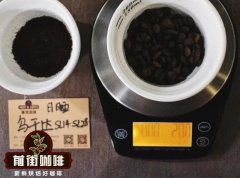
Africa Uganda Egon Mountain producing area Zor Mountain Yagrani processing plant coffee beans SL14 coffee varieties
Professional coffee knowledge exchange More coffee bean information Please pay attention to coffee workshop (Weixin Official Accounts cafe_style) Uganda coffee is a small shy in African producing areas, has not been active in the public's sight. Ugandan coffee is so shy because Uganda has always grown mostly Robusta, and in recent years with the support and development of the boutique coffee market,

A brief introduction to the flavor, taste and aroma characteristics of fresh Ugandan boutique coffee beans
This coffee is produced in the Mount Elgonne region of Uganda. Balanced acidity and rich oil between 1600 and 1900 meters above sea level are the characteristics of this coffee. It tastes mild and simple, with a papaya flavor. Dry aroma (1-5): 3.2 wet aroma (1-5): 3.4 acidity (brightness) (1-10): 8 taste (hierarchy) (1-10): 8.5 taste (alcohol thickness)

Introduction of Ugandan coffee flavor with mild soil flavor
Ugandan coffee is not a type of coffee that emphasizes rising aroma, as long as the raw beans are not and turn 100 or yellowed, they can generally have a good regional flavor, with a low ripe fruit aroma, such as the taste of red wine, and a thick mellow thickness. it is similar to some Kenyan beans with low flavor, but it also has a mild soil flavor, so it is similar to other products in East Africa in flavor characteristics.

Introduction to varieties of Ugandan Coffee produced by Flavor description, Grinding scale and Taste treatment
Dry aroma (1-5): 3.2 wet aroma (1-5): 3.4 acidity (brightness) (1-10): 8 taste (layer): 8.5 taste (alcohol thickness) (1-5): 4 aftertaste (residue) (1-10): 8.1 balance (1-5): 0 Base score (50): 50 total score (maximum)

A brief introduction to the flavor, taste and aroma characteristics of plain and mild Ugandan boutique coffee beans
This coffee is produced in the Mount Elgonne region of Uganda. Balanced acidity and rich oil between 1600 and 1900 meters above sea level are the characteristics of this coffee. It tastes mild and simple, with a papaya flavor. Dry aroma (1-5): 3.2 wet aroma (1-5): 3.4 acidity (brightness) (1-10): 8 taste (hierarchy) (1-10): 8.5 taste (alcohol thickness)

Description of roasting degree, taste and flavor of Ugandan coffee beans A brief introduction to the treatment of varieties in producing areas
A brief introduction to the roasting degree and flavor of Ugandan coffee beans; Coffee originated in Ethiopia in Africa and then moved to Yemen in the Arab region of the Middle East, so some people call it Arabica. Then it spread to Java, Indonesia, and from there to Latin America. African coffee was previously grown in the Congo, Uganda and other places, for Robster coffee, but also